



Republican Primary · Tuesday, August 3, 2027
About Matt Wilson

A lawyer who understands that systems have to work for people.

Matt and Amy Wilson, married since 1997

Amy and Matt Wilson

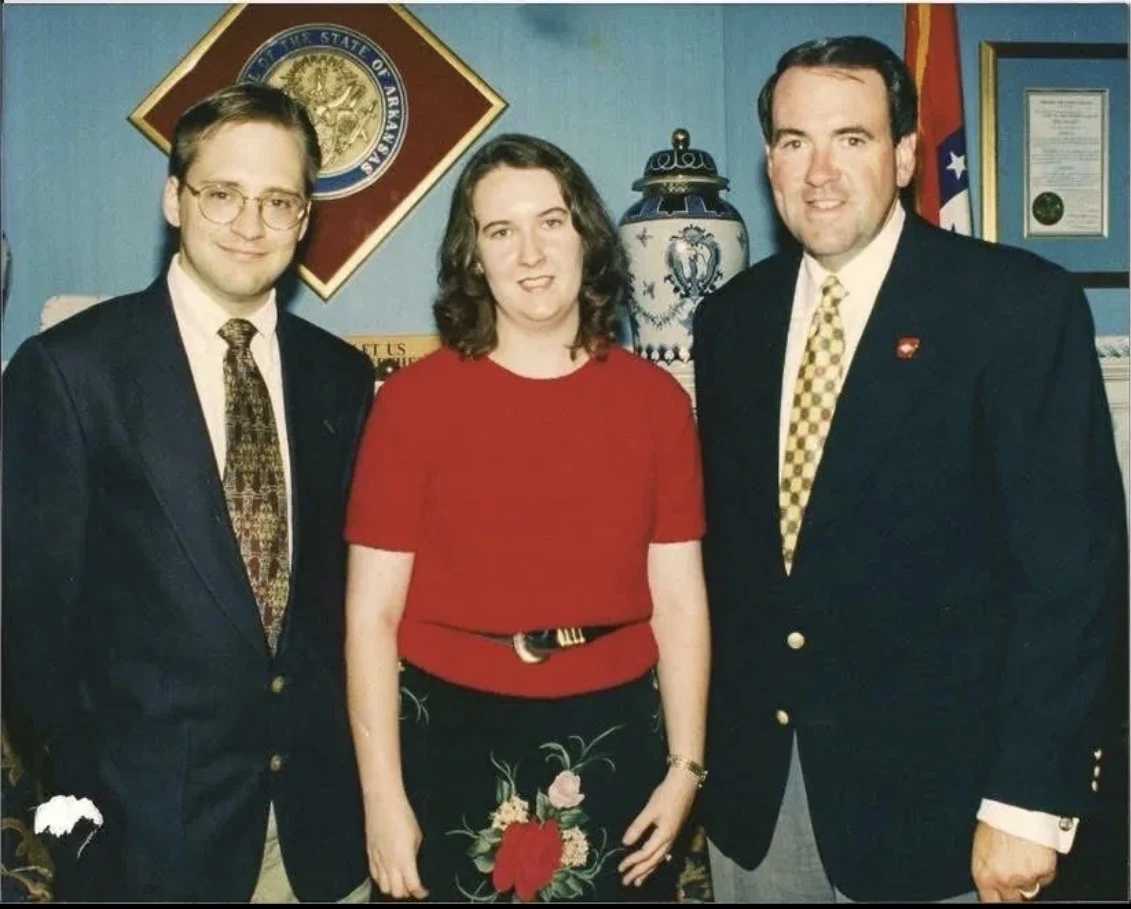
Matt and Amy Wilson with Governor Mike Huckabee, 1997

With Governor Mike Huckabee, 1997.

Matt later worked on Governor Huckabee’s 1998 campaign, and the Governor wrote the foreword to Matt’s 2007 book.

20 yrs
Practicing law in Mississippi and Tennessee
1 of 22
Mississippi patent attorneys registered with the USPTO
2024
Filed a merits-stage U.S. Supreme Court amicus brief supporting President Trump
MS & TN
Licensed and litigating in both states

Matt Wilson was born to a school principal and a school secretary and grew up in north Mississippi, in Vardaman, Pontotoc, Woodland, Baldwyn, and Tupelo. He graduated from high school in 1992. He earned a Bachelor of Science in Industrial Engineering from Mississippi State while working at the Frito-Lay plant in Jackson, where he learned to manage systems, an approach he later carried into law and public service.

An unconventional road to law

Before law school, Matt inspected natural gas lines, sold life insurance, obtained a securities license, and spent three years as a computer analyst for a Christian ministry.

He earned his law degree from Regent University, returned home, and built a practice spanning Mississippi and Tennessee. He and Amy have been married since 1997 and have two grown children.

Matt’s patent practice gives him direct experience with intellectual property and the federal systems that protect new ideas.

This figure is based on the USPTO’s official practitioner roster (opens in a new tab), filtered for attorneys with Mississippi addresses, as of August 16, 2026.

How this figure was calculated

The USPTO publishes a roster of registered patent practitioners. Filtering it for Mississippi addresses and excluding patent agents yields 22 attorneys as of August 16, 2026.

His father’s example

My father taught me that the rules apply the same to everyone.

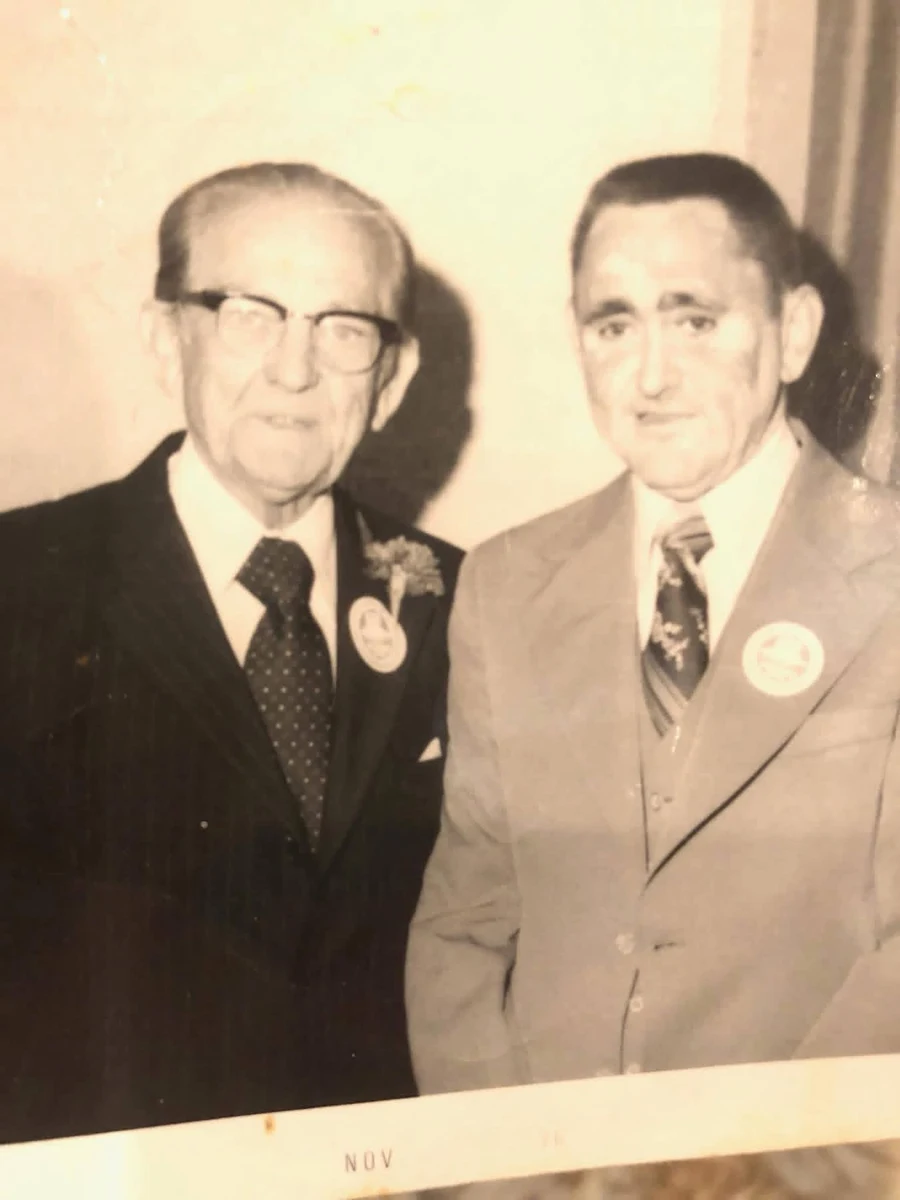
Fred Wilson with U.S. Senator John Stennis, 1978
Fred Wilson with Senator John Stennis, Vardaman, 1978
Brenda and Fred Wilson, Matt's parents
Brenda and Fred Wilson, Matt’s parents

Before I was born, my father had helped integrate a rural north Mississippi school despite serious threats. Years later, as a principal, he taught me that fairness cannot bend even for the principal’s own son.

Read the integration story

A few years before I was born, my father helped integrate a rural north Mississippi school. On the day a Black child arrived by bus, Klansmen in plain clothes lined the street and watched in silence. The situation was tense enough that Dad sent everyone home for the day.

Before long, he sent my mother and sisters to stay with family in Atlanta while he and my grandfather stayed behind. Things were uncertain enough that “Papa Farr,” my grandfather, kept his shotgun ready.

That experience taught me that doing the right thing can be dangerous. But we have to do it anyway.

The lesson my father taught me about one standard

In fourth grade, my foot caught the heel of the kid walking in front of me. He shoved me, I shoved back, and he got the last lick in at our lockers. We both landed in the principal’s office.

By the way, my father was the principal.

This was the 1980s, when corporal punishment was still common, and my father paddled both of us. I’d never been in trouble at school before, so I went back to class sobbing. When my father appeared at the classroom door and asked to speak with me, I was certain another lecture was coming.

Instead, he bent down to my eye level, looked straight at me, and said, “You did a good job. I am proud of you.” Then he stood up and walked away.

I understood exactly what he meant. He believed I had done the right thing by standing up for myself, but as principal, he couldn’t give his own son special treatment. Fairness required the same standard for both of us.

Both moments taught me the same thing: fairness only means something if it applies to everyone, including the people in charge. That is the standard I would bring to the Secretary of State’s office.

The book
The book

Before the campaign, there was a book about trying to do right.

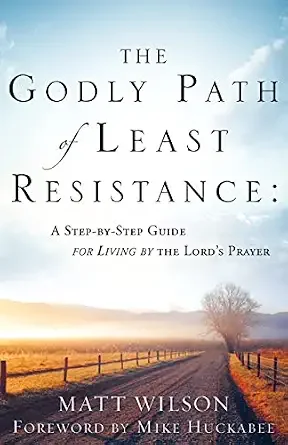
Cover of The Godly Path of Least Resistance by Matt Wilson
Book · Originally published in 2007 · Foreword by former Arkansas Governor Mike Huckabee

The Godly Path of Least Resistance

Years before he argued an election case or filed a brief at the U.S. Supreme Court, Matt wrote a book about something simpler: how an ordinary person tries to live out the Lord’s Prayer, one line at a time.

Former Arkansas Governor Mike Huckabee wrote the foreword. Matt has made the full book free to read.

Download the book free (PDF) (opens in a new tab)
In his own words

Why I’m Running

The woman who stood by the road holding Matt Wilson's campaign sign during his 2013 special election

Photo of Matt’s “angel”
taken November 5, 2013

Every vote represents a real person. , Matt Wilson

In 2013, I ran for countywide office in a special election. In the bitterly cold early hours of Election Day, I stood by the road holding my sign, hoping that voters, just like you, would head to the polls and vote for me.

While stopped at a red light, a woman I had never met started honking her horn and waving at me. I waved back and asked her to vote for me. Then the light turned green, and she made a left turn. I assumed she would keep driving and go about her day, like everyone else who drove by that morning.

But this woman was different.

She pulled into the Dollar General, parked, and walked a hundred yards or so across a vacant lot to where I was standing. Then this perfect stranger did something that still moves me more than a decade later.

She offered to hold my sign and wave it for me.

I thanked her, gave her my sign, and went to campaign elsewhere. About two hours later, I drove back and saw her still standing there with my sign, cheerfully waving it to the passing cars. This is her picture from that morning.

Even though I lost that election, I experienced God’s grace in a way I hope I never forget.

On that day, a woman I had never met dropped everything to hold my sign on the side of the road.

I do not know what became of that special woman, an angel to me that day, but her kindness has stayed with me ever since. It is a reminder that election returns aren’t just percentages. Every legitimate vote belongs to someone who showed up and entrusted a stranger with a small part of his or her future.

If a woman at a Dollar General could give hours of her day to a rank stranger, simply because voting mattered to her, then the officials entrusted with protecting those votes owed at least that much care.

For nearly twenty years, I have represented Mississippians from all walks of life as a lawyer and have learned that some problems cannot be solved in court. I have always wanted a broader impact, to fix systems, not symptoms.

That is why I am running for this office.

How I would lead the office

The Secretary of State’s office trains the people who run those systems. It is an office where fixing the system is the job itself.

How I Would Lead

Good administration is a systems problem. My industrial-engineering training taught me to look at how people, processes, technology, and accountability fit together, and to find the point where a system can fail before that failure reaches the public.

I earned my industrial-engineering degree at Mississippi State while working at the Frito-Lay plant in Jackson. Before law school, I inspected natural gas lines and spent three years as a computer analyst. Those jobs were very different, but each reinforced the same lesson: complicated systems work only when responsibilities are clear, information is reliable, and problems are identified and corrected.

Nearly twenty years of legal practice added another lesson. When a public or private system fails, real people bear the cost. Leading the Secretary of State’s office therefore means setting clear standards, recruiting capable professionals, measuring whether the office is meeting those standards, and taking responsibility when it is not.

Leadership is not claiming to know everything on the first day. It is knowing what the standard must be, choosing people capable of meeting it, asking the right questions, and taking responsibility when the system falls short.

Respect for voters must be built into the system.

Respecting voters means more than speaking respectfully during a campaign, it means building systems where records can be found, responsibilities can be traced, deadlines are enforced, and citizens can learn what happened when something goes wrong.

  • Every election record should have a documented chain of custody.
  • Every public filing should have a traceable status.
  • Every critical online service should have backup and recovery procedures.
  • Every serious failure should produce a public explanation and corrective plan.
  • Every county should receive clear standards, training, and support.

Dear friend,

If, after taking the time to learn about me and examine my record, you believe I’ve earned your trust, I would be grateful for your support.

I will respect whatever decision you make. Thank you for considering my candidacy. May God bless you, and may God continue to bless the great State of Mississippi.

Matt Wilson at a Mississippi football game
One standard, shaped by a lifetime. Vote Matt Wilson on August 3, 2027.