I filed the first merits-stage amicus brief supporting President Trump at the Supreme Court.
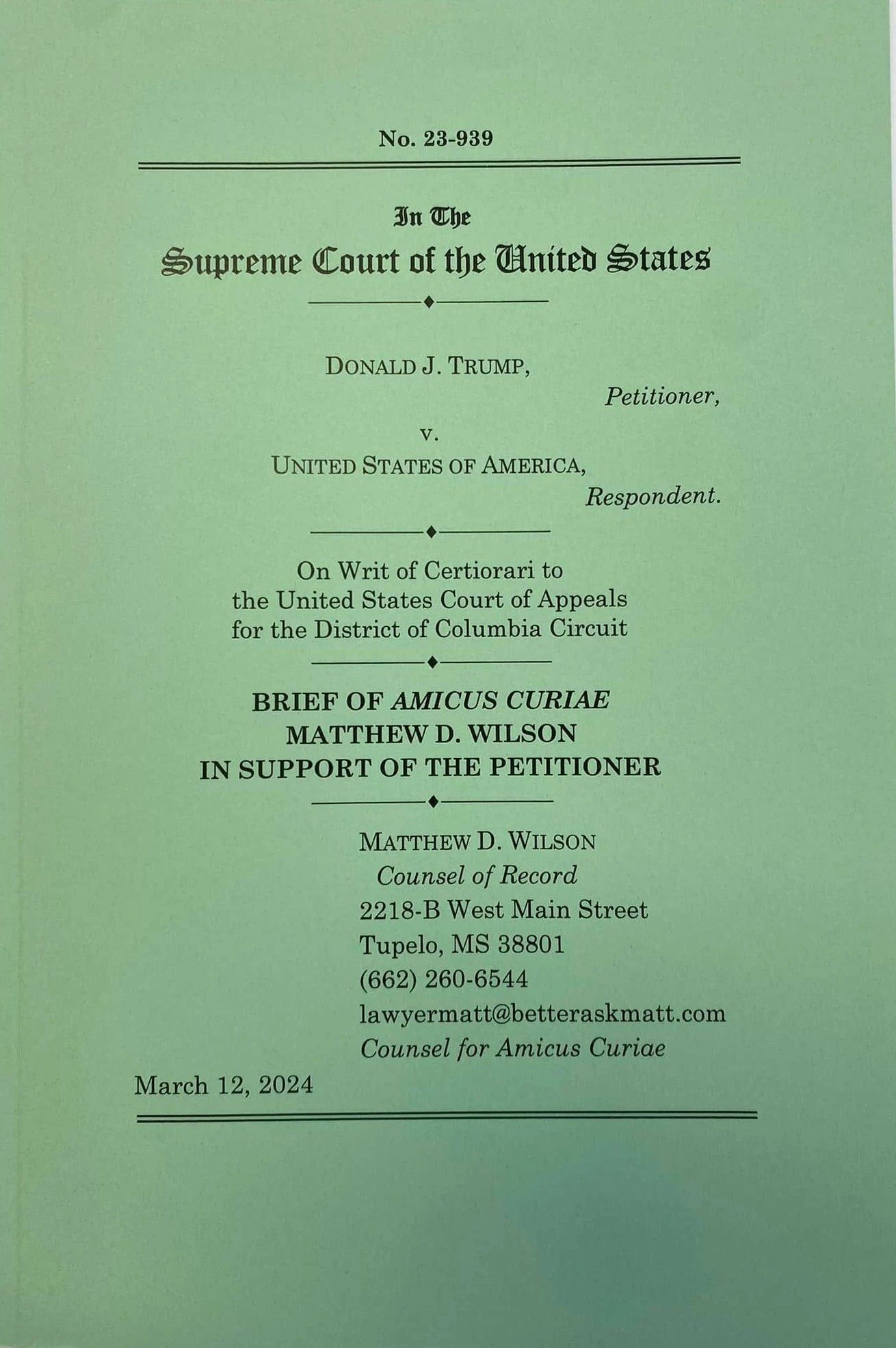
On March 12, 2024, I filed an amicus brief supporting President Donald J. Trump in Trump v. United States. It was the first merits-stage amicus brief filed on his side. It came seven days before the President's own brief and before any other amicus brief appeared on the merits docket.
References to public officials are for historical and biographical context and do not imply endorsement.
Why I filed it
I had no client. Nobody paid me. I covered the cost myself. And I did it more than two years before I was a candidate for anything, when there was no political benefit in it and some professional risk.
I did it because I believed then, and believe now, that a country which criminally prosecutes its former Presidents for official acts will not have independent Presidents for very long. My brief argued for absolute immunity for official acts unless the House impeaches and the Senate convicts first.
I also argued something that mattered to me as an election lawyer. Protecting the integrity of a federal election is part of a President's job. President Trump had 35 days between Election Day and the December 8 federal deadline to investigate allegations spanning multiple states. Nobody proves a case like that in 35 days. Failing to prove it in 35 days does not make a man a criminal. It makes him a man who ran out of time.
I would file it again tomorrow.
I support President Trump today. I supported him when there was nothing in it for me, and that is the only kind of support that is worth anything.
The filing and the legal question
The Court agreed to hear the case on February 28, 2024. I filed on March 12, seven days before President Trump filed his merits brief on March 19. The case, No. 23-939, asked whether a former President could be criminally prosecuted for conduct alleged to involve official acts while in office. My brief made a constitutional argument about presidential authority.
My brief argued that President Trump acted on what he sincerely believed had occurred. It did not ask the Supreme Court to decide whether election fraud occurred in 2020. Its argument was narrower: if President Trump acted in good faith to address what he believed was election fraud, those actions should be treated as official acts.
Read the legal basis and timing
I relied in part on the National Voter Registration Act, which declares the right to vote fundamental and assigns federal, state, and local governments responsibilities connected to protecting the exercise of that right. My brief argued that addressing alleged election fraud therefore fell within the President’s official responsibilities.
The 35-day period ran from Election Day, November 3, 2020, to the December 8, 2020, federal “safe harbor” date under the law then in effect. I argued that an inability to prove complex allegations across multiple jurisdictions in that period did not establish bad faith.
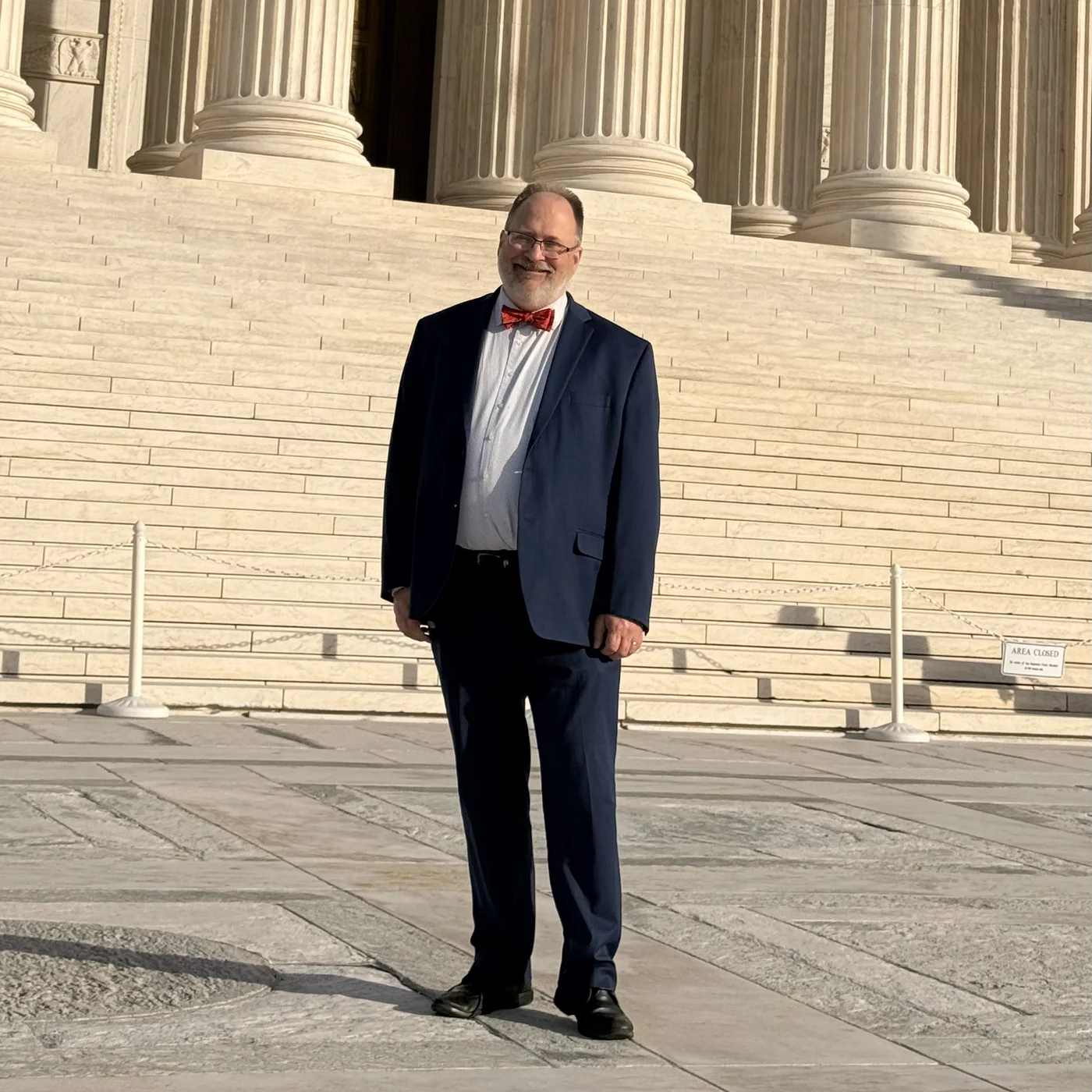
“The prime directive for any President is to faithfully execute the laws.”Matt Wilson amicus brief, Summary of the Argument, p. 3
What the Court decided
On July 1, 2024, the Court held that a former President has absolute immunity within his exclusive constitutional authority, at least presumptive immunity for other official acts, and no immunity for unofficial acts.